My Hot Friends :

Wednesday, March 24, 2010

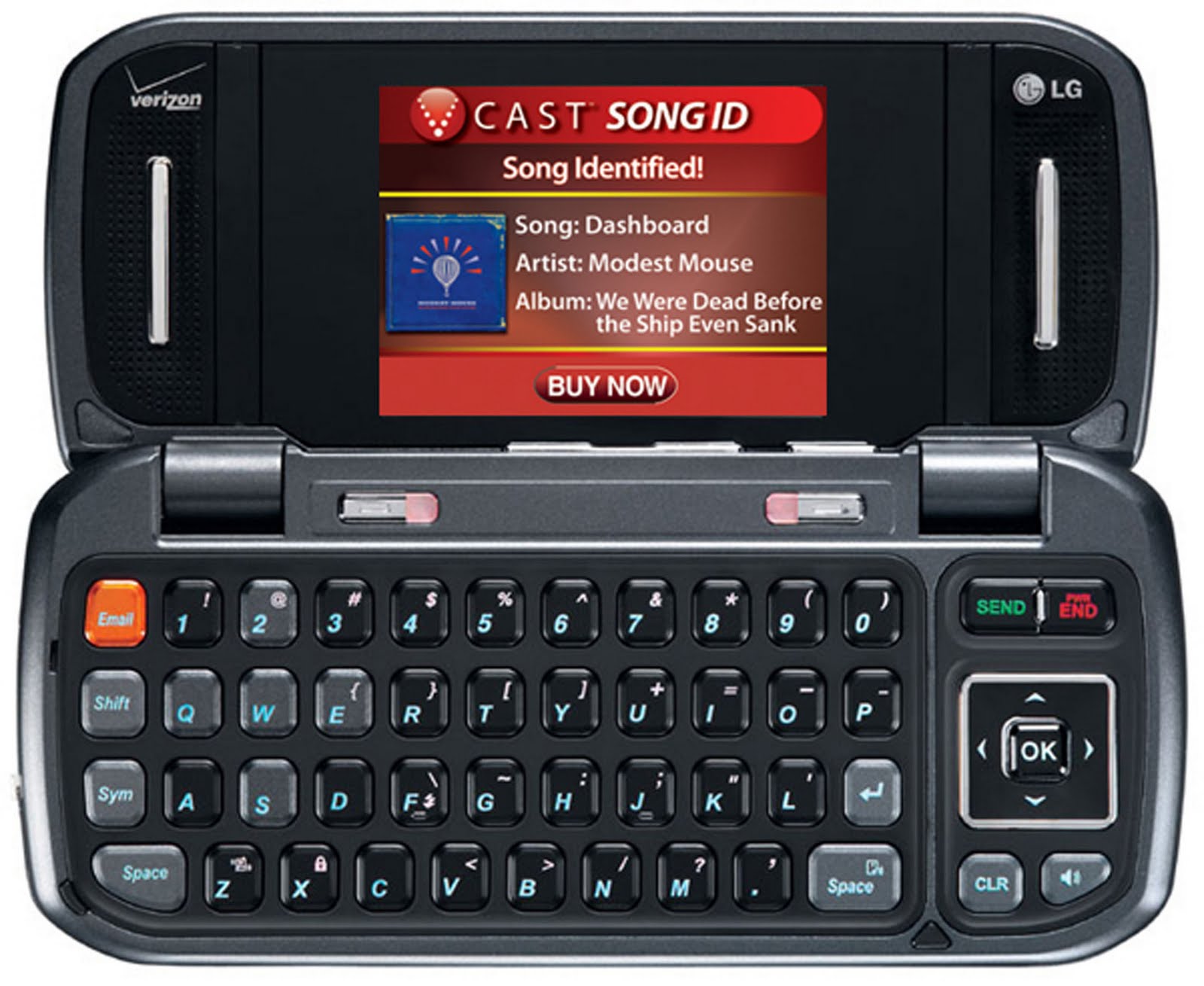
Verizon Wireless to open app store March 29

(Reuters) - Verizon Wireless, the biggest U.S. mobile operator, said it would open its own mobile phone applications store on March 29.

The venture of Verizon Communications and Vodafone Group Plc said that consumers buying applications from the store would be able to pay for apps through their cellphone bill, making it easier than other app stores where a separate account is needed.


Verizon Wireless is entering a well established market where device makers such as Blackberry maker Research in Motion and companies such as Apple Inc and Google Inc already operate rival app stores for users of Apple's iPhone and phones based on Google's Android software.

Verizon itself sells phones based on Android such as Droid from Motorola Inc. It announced the launch date at the CTIA annual wireless trade show.

(Reporting by Sinead Carew; Editing by Steve Orlofsky)
READ MORE - Verizon Wireless to open app store March 29

Tuesday, March 16, 2010

Google Nexus One sales lag Apple, Motorola: Flurry


(Reuters) - Google Inc's initial sales of its Nexus One smartphone have significantly lagged the pace of Apple Inc's iPhone and Motorola Inc's Droid sales coming out of the starting gate, an analytics firm said on Tuesday.


According to a report by Flurry, Google sold roughly 135,000 of its new Nexus One phones in its first 74 days on the market. By contrast, Apple sold 1 million of the original iPhones in the first 74 days, while Motorola sold 1.05 million Droid phones -- which are based on Google's Android software -- during the same timeframe.

The sales estimates, which Flurry said it based on software applications featuring its analytics technology that have been downloaded to most of the phones, suggests a less than stellar start to Google's plan to play a larger role in the mobile phone business.

Google launched the Nexus One phone, which it developed with handset manufacturer HTC Corp of Taiwan, in January, marking the first time the giant Internet search company had sold a hardware device directly to consumers.

But the Nexus One, unlike the iPhone or the Droid, can only be purchased on the Web and is not available at retail stores. Google has also advertised the phone exclusively online, foregoing the high-profile television ad campaigns of the iPhone and the Droid.

Kaufman Brothers analyst Aaron Kessler said he would have assumed that Google would sell more than 135,000 units.

"Clearly Google is not spending a lot of money marketing it. It doesn't seem like Google has huge expectations on this one," said Kessler.

But he noted that Google's broader mobile strategy is to grow the overall base of devices from various manufacturers that use Google's Android smartphone software.

According to a recent report by comScore, the market share of Android-based smartphones in the U.S. grew to 7.1 percent in January from 2.8 percent in October 2009.

By contrast, Apple's share grew at a slower pace, reaching 25.1 percent in January compared with 24.8 percent in October.

Google said in an emailed statement that the company was pleased with its sales volume and by how the Nexus One has been received by customers. Google's partners are shipping more than 60,000 Android based handsets each day, compared to 30,000 just three months ago, Google said.

The Nexus One is currently available for $179 with a two-year contract from Deutsche Telekom AG's T-Mobile USA, or $529 without a service plan.

Google announced separately on Tuesday that a new version of the Nexus One is now available that works on AT&T Inc's 3G wireless network. Previously, the Nexus One was only compatible with AT&T's lower speed 2G or EDGE network.

Google has said that the phone will be available with Verizon Wireless, the largest wireless carrier in the U.S., sometime in the spring. Verizon Wireless is a joint venture of Verizon Communications Inc and Vodafone Group Plc.

Flurry said it used the first 74 days of sales as a benchmark, since that was the timeframe that Apple initially announced it took to sell the first million iPhones in 2007. Since March 19 will mark the first 74 days of Nexus One sales, Flurry said it forecasted results for the last few days of the period.

(Reporting by Alexei Oreskovic, editing by Gerald E. McCormick and Carol Bishopric)
READ MORE - Google Nexus One sales lag Apple, Motorola: Flurry

Monday, March 8, 2010

Panasonic ties with Best Buy for 3D TV promotion

(Reuters) - Panasonic Corp will launch its 3D televisions in the United States on Wednesday, and work with top U.S. electronics retailer Best Buy Co to promote the products, the Japanese electronics maker said.


The maker of Viera flat-panel TVs said it expects a 50-inch model to retail for $2,500, and aims to sell 500,000 3D TVs in the United States in the first year of their launch, half its annual global sales target.

Under the joint promotion, Best Buy will set up special sections at its retail outlets, where prospective customers can try out Panasonic's 3D TVs.

Panasonic, the world's No.4 flat TV maker behind Samsung Electronics Co Ltd, LG Electronics Inc and Sony Corp, holds high hopes for 3D TVs as it aims to turn its TV business profitable in the year starting April.

The sci-fi blockbuster "Avatar" and other recent titles have sparked massive interest in 3D movies, raising TV makers' hopes for a strong debut of 3D models.

Shares in Panasonic closed up 2.8 percent at 1,307 yen on Monday, outperforming the Tokyo stock market's electrical machinery index, which gained 2.1 percent.

(Reporting by Kiyoshi Takenaka; Editing by Rupert Winchester)
READ MORE - Panasonic ties with Best Buy for 3D TV promotion

Sunday, February 21, 2010

ITC to investigate Apple complaint vs Nokia


SAN FRANCISCO (Reuters) - The U.S. International Trade Commission said on Friday it has agreed to investigate Apple Inc's patent infringement complaint against Nokia Oyj, as the legal battle between the two technology heavyweights continues to play out.

The companies have been locked in a legal tussle since last October, when Nokia sued Apple and said the iPhone maker was using its patented technologies without paying for them.

Apple countersued Nokia, and both companies have turned to the ITC, filing complaints with the trade body.

Apple is asking the ITC to block Nokia from selling some mobile devices in the U.S. Apple contends the products infringe upon nine of its patents.

The case will be assigned to one of the ITC's six administrative law judges, who will hold an hearing on the evidence. The trade body will set a target date for completing its probe with 45 days after beginning the investigation.

The ITC agreed last month to investigate Nokia's complaint against Apple. Nokia alleges Apple infringed seven of its patents.

The legal dispute between Nokia and Apple potentially involves hundreds of millions of dollars in annual royalties.

Nokia is the world's largest mobile phone maker but has had trouble in the fast-growing smartphone market. Apple entered the smartphone market in 2007 but has seen huge success with the iPhone.

(Reporting by Gabriel Madway, editing by Gerald E. McCormick)
READ MORE - ITC to investigate Apple complaint vs Nokia

Tuesday, February 16, 2010

Google CEO woos suspicious mobile industry


BARCELONA (Reuters) - Google's Chief Executive Eric Schmidt urged the mobile industry to embrace the mobile Web instead of seeing Google as the enemy, in his first speech to the world's biggest wireless industry fair.


Schmidt said the industry stood at an historic moment when the computing power of mobile phones, attractive services and networks that could handle them had come together, and said Google was driving network traffic to the benefit of operators.


"It's like magic. All of a sudden there are things that you can do that didn't really occur to you... because of this convergence point," he told a packed auditorium at the Mobile World Congress in Barcelona.

"That time is upon us -- right now, right here, for this year and at least the next many years," he told the audience of operators, telecoms gear vendors, and observers of an industry that generally views Google with suspicion.

Google has recently made overtures to other industries who consider it a threat, including newspaper and book publishers, and advertising agencies.

In telecoms, Google has raised hackles by launching a free smartphone platform, Android, selling its own-branded phone directly to consumers without the mediation of carriers, and announcing plans to build a super-fast broadband network.

It has also been seen as a problem by some operators, who are having to invest to upgrade their networks to meet the huge demand for data services required by users who are spending more and more time on the mobile Web on sites from Google and others.

Google announced two new features: one that translates images of text in foreign languages captured by a camera, such as restaurant menus, and the addition of German as the fourth language supported by Google's voice-recognition technology.

YES, NOT NO

Schmidt's remarks were met with skepticism and some hostility from an audience already worried about economic recession and the prospect of becoming "dumb pipes" that merely carry valuable content, including free Internet calls.

"I'm talking about Google stealing operators' talk minutes," said one questioner, when asked by Schmidt to clarify his concerns. Schmidt shot back: "It's not our objective to steal your minutes."

Later, in a roundtable with journalists, Schmidt explained why he believed the two industries needed one another.

"We need them to go ahead and invest these enormous amounts of money at great risk and, in return, they need us to continue to build powerful new reasons to upgrade the connections and get a new phone," he said.

"Find a way to say yes, not no, is our thesis."

Google's core business is in helping online businesses to attract vast audiences to which it can sell advertising.

"We want to have a little bit of Google in everybody's transaction with the Internet," Schmidt said.

He added that, eventually, other means of making money than advertising, like selling software to large enterprises, would become significant. Google has email, document-management and other subscription services for business users.

(Reporting by Georgina Prodhan and Kate Holton; Editing by Andre Grenon and Tim Dobbyn)
READ MORE - Google CEO woos suspicious mobile industry

Friday, February 12, 2010

Toy makers look to tech, green materials for 2010

Toy makers look to tech, green materials for 2010

NEW YORK (Reuters) - From Mattel's "Puppy Tweets" linking pets to a Twitter feed to biodegradable nursery toys, toy makers are focusing on fun technology and green materials to win sales in 2010.

The top U.S. toy fair kicks off in New York on Sunday, with an eye to selling retailers on the best playthings for the year. With the country slowly emerging from recession, toy makers will still focus on value, experts say.

"There isn't a sweet spot per se. The emphasis is on value more than price," said NPD analyst Anita Frazier.

"You will see the manufacturers emphasize how much play time or value the kid gets out of the toy and then talk about the amazing price associated with that play value," she said.

U.S. toy retail sales fell less than 1 percent in 2009 after a disastrous 2008, while the recent holiday quarter saw unit sales rise nearly 4 percent over the prior-year period, according to market research firm NPD Group.

Toy makers will pull out all the stops to keep that momentum going.

Industry leaders like Mattel (MAT.O) are focusing on new links to technology, such as a sound and motion sensor called "Puppy Tweets" that attaches to a dog's collar and posts to a Twitter account in the pet's name.

Smaller rival Hasbro (HAS.N) is putting a twist on the classics, like a new Scrabble word game that lets players shuffle electronic cubes rather than using wooden tiles on a game board.

Scrabble Flash Cubes contain "Smart Tile Technology" which recognizes words formed when the letters are placed side by side and keeps score of correctly spelled words.
The Dangerous Book for Boys - Magic Kit
Hasbro is also celebrating the 75th anniversary of Monopoly by relaunching the game with a round playing board and an electronic console that features sound effects and song clips including "Celebration" by Kool & the Gang and "Drive My Car" by the Beatles.

U.S.-based Wowwee will tout "Paper Jamz," an electric guitar made of cardboard that produces music from touch-sensitive electronic sensors hidden under its surface.

The tech-savvy emphasis is here to stay as toy makers benefit from linking an established brand name to newer technologies like social networking, already popular among children, said Elizabeth Komes, Associate Publisher of Playthings Magazine.

Customers are also often willing to pay higher prices for these toys, she noted.

GREEN IS IN

Toy Fair will also feature a "green" pavilion for environmentally friendly toys for the first time.

Reyne Rice, trend specialist for the Toy Industry Association, said about 25 percent of retail buyers at last year's event wanted to see more "eco-friendly" products.

Toys made from organic cotton, bamboo or other organic materials are safer for children and could eliminate or reduce huge testing costs associated with playthings, Komes said.

While bigger players like Mattel and Hasbro are not prominent in this space, they are becoming increasingly "green" in choosing their packaging material.

Toy maker WHAM-O Inc is working with Colorado-based Sprig Toys to make a line of preschool products out of biodegradable materials.

Plush toy maker Hosung, known for its miYim organic toy line, has partnered with famed anthropologist Jane Goodall to design an alternative to chemically treated toys.

Lesser-known game maker TDC Games even offers puzzles that have flower seeds embedded in each piece.

But being eco-friendly comes with a price as many of these raw materials are often more expensive.

More traditional toys will also be in the spotlight next week, with Hasbro marking the 50th anniversary of its "Play-Doh Fun Factory."

Mattel is betting big on its World Wrestling Entertainment (WWE.N) line with figures like "Triple H" and "The Undertaker" already attracting buzz. The toys are priced between $10 and $25.


The world's biggest toy maker is also expected to unveil a new doll under its "I can be" Barbie range. It gave fans a chance to choose the 125th career of the iconic doll which made its debut 51 years ago.


(Reporting by Dhanya Skariachan; Editing by Michele Gershberg and Matthew Lewis)

READ MORE - Toy makers look to tech, green materials for 2010
Related Posts with Thumbnails

FEEDJIT Live Traffic Feed

About This Blog

  © Blogger templates The Professional Template by Ourblogtemplates.com 2008

Back to TOP